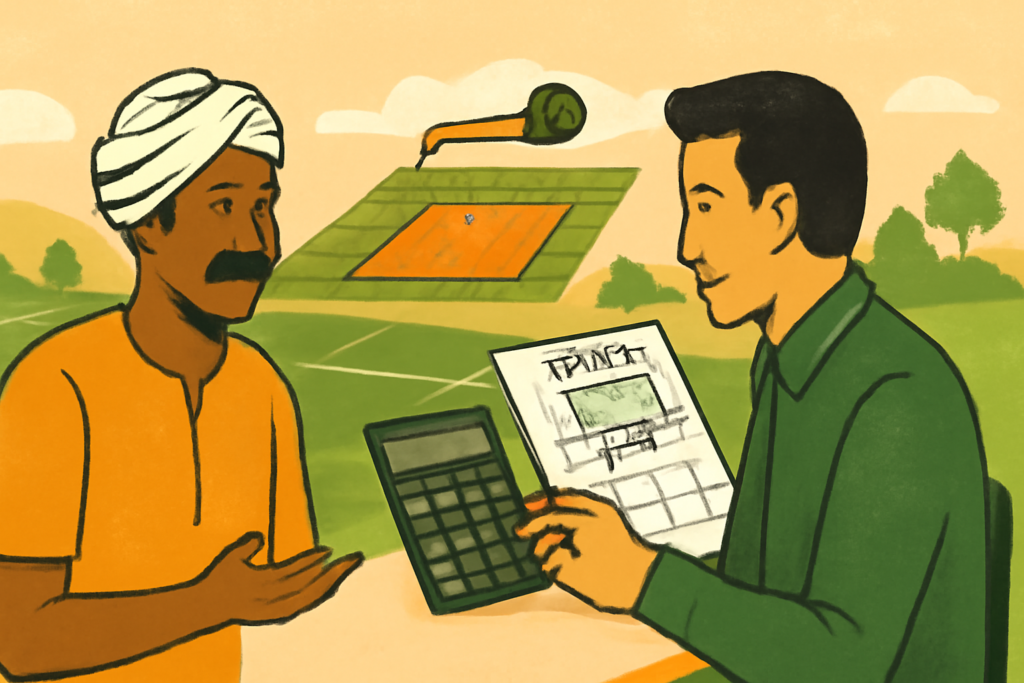
Katha to Square Feet Conversion Guide: A Practical Resource for Indian Land Buyers
Introduction
When dealing with land measurement in India, especially in eastern states like Bihar, West Bengal, and Assam, the unit Katha is commonly used. However, for many buyers, farmers, and real estate professionals, understanding how to convert Katha to square feet is essential for making informed decisions. This guide will walk you through the conversion process, provide example calculations, highlight common mistakes, and answer frequently asked questions.
What is a Katha?
Katha is a traditional unit of land measurement used primarily in parts of eastern India and Bangladesh. It is often used in land transactions and agricultural land measurement. However, it’s important to note that the size of one Katha can vary significantly depending on the state or even local records.
Note: Land unit values like Katha, Bigha, Marla, and Kanal can differ by region. Always check local records or authoritative sources for precise measurements. This article does not provide legal advice.
Why Convert Katha to Square Feet?
Square feet is a more universally recognized and standardized unit for measuring land, especially in real estate listings, construction, and urban planning. Converting Katha to square feet helps in:
- Comparing land sizes accurately.
- Calculating property prices based on per square foot rates.
- Planning construction or agricultural activities.
- Understanding land records and legal documents.
Standard Conversion Formula
Because the size of a Katha varies, there is no single universal conversion. However, a commonly accepted average is:
| State/Region | 1 Katha (approx.) | Equivalent in Square Feet |
|---|---|---|
| Bihar | 1 Katha | 1361.25 sq ft |
| West Bengal | 1 Katha | 720 sq ft |
| Assam | 1 Katha | 2880 sq ft |
To convert Katha to square feet, use the formula:
Square Feet = Number of Kathas × Size of 1 Katha in Square Feet
Example Calculation
Suppose you have 5 Kathas of land in Bihar and want to find its area in square feet.
- 1 Katha in Bihar = 1361.25 sq ft
- Number of Kathas = 5
Using the formula:
Square Feet = 5 × 1361.25 = 6806.25 sq ft
So, 5 Kathas of land in Bihar equals approximately 6806.25 square feet.
Common Mistakes to Avoid
- Assuming a fixed size for Katha: Since the size varies by state and sometimes by locality, always verify the exact conversion factor for your area.
- Ignoring decimals: Land measurement often involves fractions; rounding off too early can lead to errors.
- Confusing with other land units: Units like Gunta, Bigha, and Marla are different and should not be mixed up.
- Not consulting local records: Always cross-check with local land records or authorities before finalizing transactions.
Frequently Asked Questions (FAQs)
1. Is the size of Katha the same across India?
No, Katha size varies by state and sometimes by district or village. For example, 1 Katha in Bihar is about 1361.25 sq ft, while in West Bengal it is roughly 720 sq ft.
2. How can I convert Katha to other units like Gunta or Acre?
You can use our dedicated calculators for accurate conversions:
3. Why is it important to know the exact land unit conversions?
Knowing exact conversions helps in fair pricing, legal clarity, and proper land use planning. It also prevents disputes and confusion during land transactions.
4. Can I rely solely on online calculators for land measurement?
Online calculators are helpful tools but should be used alongside official land records and local measurements for accuracy.
Additional Resources
For a broader understanding of land units and conversions, you may find these resources helpful:
- Comprehensive Guide to Indian Land Units
- State-wise Land Measurement Guides
- Gunta to Square Feet Calculator
- Cent to Square Feet Calculator
Conclusion
Converting Katha to square feet is straightforward once you know the correct size of a Katha in your region. Always verify local standards and use reliable tools like the Katha to Square Feet Calculator to ensure accuracy. This knowledge empowers land buyers, farmers, students, and real estate professionals to make better decisions and avoid costly mistakes.